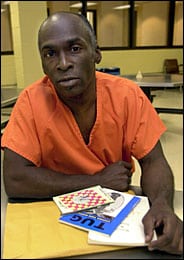
The Stephen Booker Trust was created through a gift from Stephen Todd Booker, who died on Florida’s death row in 2023.
Before his death, Stephen chose to donate money to FADP to provide direct aid to the families of those facing execution. Today, those funds allow us to provide practical support to people navigating the final stages of the death penalty process.
When an execution warrant is signed, families often have only a few weeks to prepare for a series of urgent decisions and expenses. They may need to travel across the state, country, or world for final visits, secure lodging near Florida State Prison, arrange for a loved one’s remains to be returned home, or manage countless logistical details while coping with the reality of an impending execution.
The Stephen Booker Trust enables FADP to respond quickly when those needs arise. In the past, it has allowed us to offer direct assistance with things like:
- Travel for final visits
- Hotel accommodations near Florida State Prison
- Phone calls and communication costs
- Postage for final correspondence
- Funeral and burial expenses
- Transportation of remains
- Other urgent family needs related to an execution or life on death row
Because every family’s circumstances are different, support is tailored to the needs of each situation. Thanks to Stephen’s remarkable generosity, families confronting the realities of Florida’s death penalty receive practical support at a time when it is most needed.
Stephen Booker Bio (if helpful): Stephen Todd Booker was born in Brooklyn, New York, in 1953 and spent much of his life in the American South, including nearly five decades on Florida’s death row.
In 1978, he was convicted of the murder of 94-year-old Lorine Demoss Harmon. The crime was a serious and tragic act of violence, which Stephen acknowledged. Over the years, some members of Ms. Harmon’s family came to publicly oppose his execution.
Before his incarceration, Stephen served in the United States Army, including overseas service.
From his cell on Florida death row, he became an accomplished poet whose work appeared in respected literary journals including The Kenyon Review, Seneca Review, and Field. His writing received wide recognition, and his poetry collection Tug became his best-known work.
He died in 2023 at the age of 71, still in that same cell where he did all of his writing.